42:01
Amazon FBA/PPC
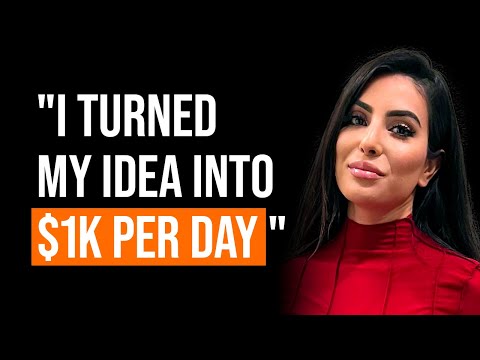
Nafisa took Study Key, a hands-on flashcard brand for language learners, from $0 to roughly $30,000/month (~$1,000+/day) in its first year by pairing a genuinely research-driven, all-senses product design with a shift from unfocused PPC spending to ranking-oriented advertising run by Sophie Society, then compounding that base through organic-ranking optimization, disciplined product-line expansion, and tightly focused branding.
Study Key was designed over roughly a year by reading competitor flashcard reviews at scale to catalog and avoid common complaints, aiming to engage all learner senses rather than being 'just flash cards.'
Nafisa deliberately used herself as the target customer ('avatar') — she was learning Spanish herself — which let her design directly against real learner pain points instead of guessing.
Early growth stalled at ~10 units/day against a 30 units/day goal because Nafisa's team lacked PPC expertise and she stayed out of the ad/business side, calling herself 'more of a designer.'
She self-educated via YouTube, discovered the interviewer's PPC content (recalling him in an 'Eskimo coat'), concluded 'this guy knows what he's talking about,' and that led her to hire Sophie Society in December.
The core PPC lesson from Sophie Society was distinguishing ACOS from TACOS: PPC's real job is building organic ranking, not just optimizing ad cost in isolation.
After ranking improved, the team identified which search-term families were already converting and tailored thumbnail, title, and listing copy to reinforce those winning terms ('do more of what works').
Once organic ranking was strong, Study Key entered a deliberate 'harvesting' phase — cutting ad spend ~10%, ending price discounts, and raising the price from $32.99 to $39.99 — to test how much ranking would hold up unaided.
Ad spend roughly doubled (from ~$5,000/month to ~$8,000-9,000/month) while revenue quadrupled, taking the brand to 30-50 units/day and ~$30,000/month.
A second product (the 'Nouns' box) launched in March by piggybacking on the first box's existing reviews/ranking — Gabby's idea — which caused it to 'take off like wildfire' but also cannibalized the original box's sales for its first month until the listings were disconnected.
A third, unreleased product (a toddlers' English-learning flash-card pack with dry-erase markers) was previewed exclusively in the interview; Nafisa called it one of her last new launches for a while, planning instead to focus on branding and amplifying existing products.
Growth strategy going forward centers on 'branding' as the overarching umbrella — influencer marketing, Instagram, and TikTok — rather than diversifying into new sales channels (Walmart, Shopify, eBay, Etsy), which she frames as 'shiny object syndrome' to avoid.
Review generation is handled by sending a gift and separately collecting contact info, then later and unconnectedly asking politely for a review — explicitly not tying the gift to the ask, which she frames as staying within Amazon's Terms of Service.
Negative or critical reviews (e.g., box too small, product wouldn't fit back inside) are treated as a valuable, bias-correcting feedback loop rather than a personal insult, since creators are inherently biased about their own product.
Nafisa strongly advocates delegation for tasks outside her core competency (social media, PPC) while retaining enough personal Amazon knowledge to 'guide' and 'lead' the specialists she hires; she still does her own accounting.
The interviewer pushes Nafisa to lean into her own personality as 'the face' of the brand, arguing 'people connect to people, they don't connect to logos'; Nafisa admits she worries her younger look undercuts credibility for an educational product and that she needs to 'wear her confidence' more.
Nafisa's stated long-term ambition is to compete with Duolingo, positioning Study Key's hands-on flashcard approach as serving a segment of learners Duolingo's online-lesson format doesn't reach; she has already added lesson-like structure to move closer to that goal.
Closing advice to her past self: be patient, believe in yourself, find a mentor, listen to everyone's advice but make your own decisions, and don't give up — echoing Jeff Bezos's 'slow is smooth, smooth is fast,' which she explicitly tries (imperfectly) to live by.
ACOS (Average Cost of Sale) — A standard Amazon PPC metric measuring ad spend against ad-attributed sales, contrasted in the video with TACOS as an incomplete way to judge PPC success. Apply: Use ACOS to gauge the immediate efficiency of a single campaign, but don't treat it as the full picture of whether PPC is working.
TACOS (Total Average Cost of Sale) — Total ad spend divided by total sales (organic plus paid), framed in the video as the metric that actually captures how PPC spend is converting into organic ranking gains. Apply: Track TACOS alongside ACOS to see whether ad spend is building durable organic ranking rather than just buying short-term ad sales.
Laser-targeted ranking campaigns — PPC campaigns structured specifically to drive organic keyword ranking rather than to directly optimize ad cost. Apply: When a listing plateaus, restructure campaigns around ranking-focused targeting instead of pure ACOS optimization, as Sophie Society did to break Study Key's plateau.
Search-term-family optimization — Identifying medium-search-volume, relevant search-term families that are already ranking/converting well from ad spend, then reinforcing them. Apply: Tailor thumbnail, title, and listing copy to the search terms already proven to convert, then repeat the process ('do more of what works') until the listing is maxed out.
Harvesting — Deliberately pulling back ad spend (and, at a broader scale, overall growth pace) to test how much organic ranking or momentum holds up unaided. Apply: After establishing strong organic ranking, cut ad spend incrementally (e.g., by 10%) and stop discounting to measure true organic strength, then scale pace gradually rather than pushing everything at once.
Review-mining for product R&D — Reading large volumes of competitor product reviews before designing a product, specifically to catalog recurring complaints. Apply: Before finalizing a product design, study competitor reviews to identify and deliberately avoid their most common failure points.
Amazon Brand Analytics / Product Opportunity Explorer — Amazon's own analytics tooling that surfaces which product features drive purchase versus non-purchase decisions. Apply: Use Brand Analytics/Opportunity Explorer to shortcut product-feature research instead of relying solely on manual review reading.
Repeat purchase rate as a growth signal — Tracking how often customers buy again, notable for Study Key because flashcards are non-consumable yet still saw high repeat purchases. Apply: Monitor repeat purchase rate even for non-consumable products as a signal of customer satisfaction and brand loyalty beyond one-off transactions.
Customer experience chain — A causal sequence where good customer experience leads to good reviews, which leads to a good unboxing experience, which leads to natural/organic sales. Apply: Invest in product and unboxing quality upfront so that organic sales growth compounds on its own, independent of paid ranking efforts.
Masterminds — Internal cross-account meetings at Sophie Society where senior strategists share new PPC updates, working strategies, wins, and challenges across different client brands. Apply: Pool tactical learnings across multiple client accounts (e.g., Gabby's piggyback idea) so successful strategies from one brand can be applied to another.
Engagement-based learning technique — A learning method emphasizing speaking/sounding words aloud and personalizing fill-in-the-blank content rather than passively flipping flashcards. Apply: Design learning tools that require active production (speaking, personalizing) rather than passive review, to improve retention.
Phrase set / 'blue set' — A specific Study Key product line offering a personalizable question-and-answer card format aimed at travelers. Apply: Use the phrase set for travel scenarios by filling in personalized blanks for the specific things a traveler wants to ask or say.
Piggybacking a launch off existing reviews — Launching a new product as a 'variation' of an established listing to inherit its existing reviews and ranking, then disconnecting the listings once independently established. Apply: Launch a related new SKU tied to an established listing's reviews for a fast start, but monitor for sales cannibalization and disconnect the listings once the new product can stand on its own.
Shiny object syndrome (anti-pattern) — The tendency for entrepreneurs, after succeeding in one channel, to chase new channels or platforms (e.g., Walmart, retail) instead of doubling down on what already works. Apply: Resist expanding into new sales channels prematurely; instead deepen investment in the single channel and niche that's already proven (as Nafisa does by staying Amazon-only and language-learning-only).
TOS-compliant review-generation framework — A three-step review-solicitation method: send a gift, separately collect customer contact info, then later and unconnectedly ask politely for a review, with no explicit exchange tying the gift to the review. Apply: Keep any gift/freebie completely disconnected in time and framing from the later review request to solicit reviews without violating Amazon's prohibition on incentivized reviews.
Critical reviews as a feedback loop — Treating negative or critical customer reviews as bias-correcting product intelligence rather than personal criticism, since creators are inherently biased about their own product. Apply: Read critical reviews for concrete, fixable issues (e.g., a box being too small) and use them to iterate the product design.
Delegation with retained domain knowledge — Hiring specialists for tasks outside one's core competency (PPC, social media) while retaining just enough personal knowledge to guide and lead them. Apply: Don't attempt every function yourself; delegate to specialists, but build enough personal expertise in the delegated domain to direct and evaluate their work.
Personal branding / 'the face' of the brand — Leveraging the founder's own personality and charisma as a visible part of brand marketing, on the premise that people connect to people rather than logos. Apply: Appear personally in brand content (reels, interviews) rather than keeping the founder invisible behind the product/logo.
'Whatever cards you're dealt, play them' — The interviewer's personal philosophy of using one's given attributes or assets fully, even if it feels insufficient or unconventional. Apply: Lean into personal traits or advantages (e.g., charisma, unique background) as marketing assets rather than downplaying them.
'Slow is smooth, smooth is fast' (Jeff Bezos) — A management principle, attributed to Jeff Bezos, holding that deliberate, controlled execution ultimately outpaces frantic multitasking. Apply: Resist chasing every opportunity simultaneously; execute fewer priorities deliberately to avoid spreading too thin to have real impact in any one domain.
Being your own avatar/target customer — Designing a product for oneself as the actual target user, using personal experience of the problem to guide design decisions. Apply: When personally part of the target market, use your own frustrations and needs as a direct design brief rather than relying solely on external research.
TACOS (total ad spend ÷ total sales), not ACOS, is framed as the metric that actually captures whether PPC is converting into durable organic ranking gains — a reframe of a common seller mistake of optimizing ad efficiency in isolation.
'Harvesting' is used at two different scales in the same story: tactically (cutting ad spend 10% to stress-test organic ranking) and strategically (consciously slowing overall business pace after establishing momentum, 'push it a tiny bit at a time rather than throw it off the cliff') — the same underlying discipline applied to both ad budgets and overall growth tempo.
Piggybacking a new SKU off an established listing's reviews is a fast way to launch, but the interview reveals its hidden failure mode: it can outsell and cannibalize the original product within the first month, requiring the team to react by disconnecting the listings — a tradeoff not obvious from the tactic's upside alone.
The review-request method described (gift and review ask deliberately separated in time and never explicitly linked) is presented as a specific technique for soliciting reviews while staying inside Amazon's TOS on incentivized reviews, motivated by explicit fear of platform penalties since Amazon is their primary sales channel.
Being your own 'avatar' (designing a product you'd want as its actual target user) is credited as what let Nafisa skip guesswork on learner pain points — a shortcut to product-market fit that isn't about market research tools but personal lived experience.
Sophie Society's internal 'mastermind' meetings show how a services agency using pooled, cross-account pattern recognition (which PPC tactics are and aren't working across many clients) feeds directly back into a single client's strategy, like the review-piggyback idea originating with Gabby rather than Nafisa.
Nafisa frames her own delegation instinct as compensating for a specific self-assessed limitation (design strength, marketing/social weakness) rather than a general 'hire everything out' philosophy — she still personally does accounting despite advocating delegation elsewhere.
«This brand owner grew her brand from zero to over a thousand dollars a day in revenue in a single year, and she's only getting started.»
— 00:16
«she was stuck at a plateau, and she had no idea how she was going to get through this glass ceiling. So, she locked herself in a room and vowed not to leave until she had figured this Amazon thing out.»
— 00:41
«Then I realized it wasn't that I wasn't putting in, it was that it wasn't being put in right.»
— 10:32
«I can't even explain to you how excited and happy I am that I made that decision that day.»
— 12:49
«I've always said to everyone, I'm going to compete with Duolingo eventually.»
— 16:13
«you could like do the flash learning, but... what you really need to do to learn is engage and actually sound things out and say it and personalize it and that's what really helps people learn and retain.»
— 20:57
«And uh Yeah, it was that and that was obviously Gabby's idea. I wouldn't have known otherwise.»
— 23:45
«I haven't shown the designs to anyone because I'm kind of a paranoid person.»
— 25:01
«No no exchange, nothing that violates Amazon's terms... That's the one thing I'm really paranoid about because Amazon's so strict with that stuff...»
— 29:09
«We already the product itself is good enough for people to be prompt to tell us and tell other people about it. We don't need to be sneaky about it. That's it.»
— 29:50
«...you never know is sometimes when you are the creator, you have a lot of bias and you think your product is perfect but until people truly tell you their thoughts you're not going to know.»
— 31:22
«You need to be able to say, 'I can't do this, but I can pay someone to do it right.'»
— 33:43
«My experience has been people connect to people. They don't connect to logos, you know?»
— 34:53
«My experience has been whatever cards you're dealt, play them. Whether it feels like cheating or it feels like it's not enough or whatever it feels like, if you got the card, play it.»
— 36:01
«...slow is smooth, smooth is fast. So basically by that logic slow is fast.»
— 38:42
«I just need to push it a tiny bit at a time rather than try to throw it off the cliff.»
— 39:36
Reception
Viewers responded warmly with brief positive comments, though one message was an unrelated SEO marketing pitch rather than genuine feedback.
The video works as both a genuine founder case study — with concrete, attributed detail on product design, PPC strategy, and review tactics — and as promotional content for the interviewer's agency (Sophie Society), whose services are credited for the growth and pitched directly in the outro.
42:01